
 English
 Deutsch
 한국어
한국어 Русский
 Français
 日本語
日本語 لالعربية
 हिन्दी
 Español
 Português
 繁体中文
繁体中文 简体中文
简体中文
















產品
Hazardous & Industrial
IP Communication
 知識
知識
2026-02-12 14:27:24
How to Use ROIP Gateways for Intercom Systems
Learn how Becke Telcom ROIP gateways work, their core connection methods and key capabilities. Discover how ROIP gateways enable cross-protocol intercom integration and SIP/IP conversion for all radio types.

貝克電信
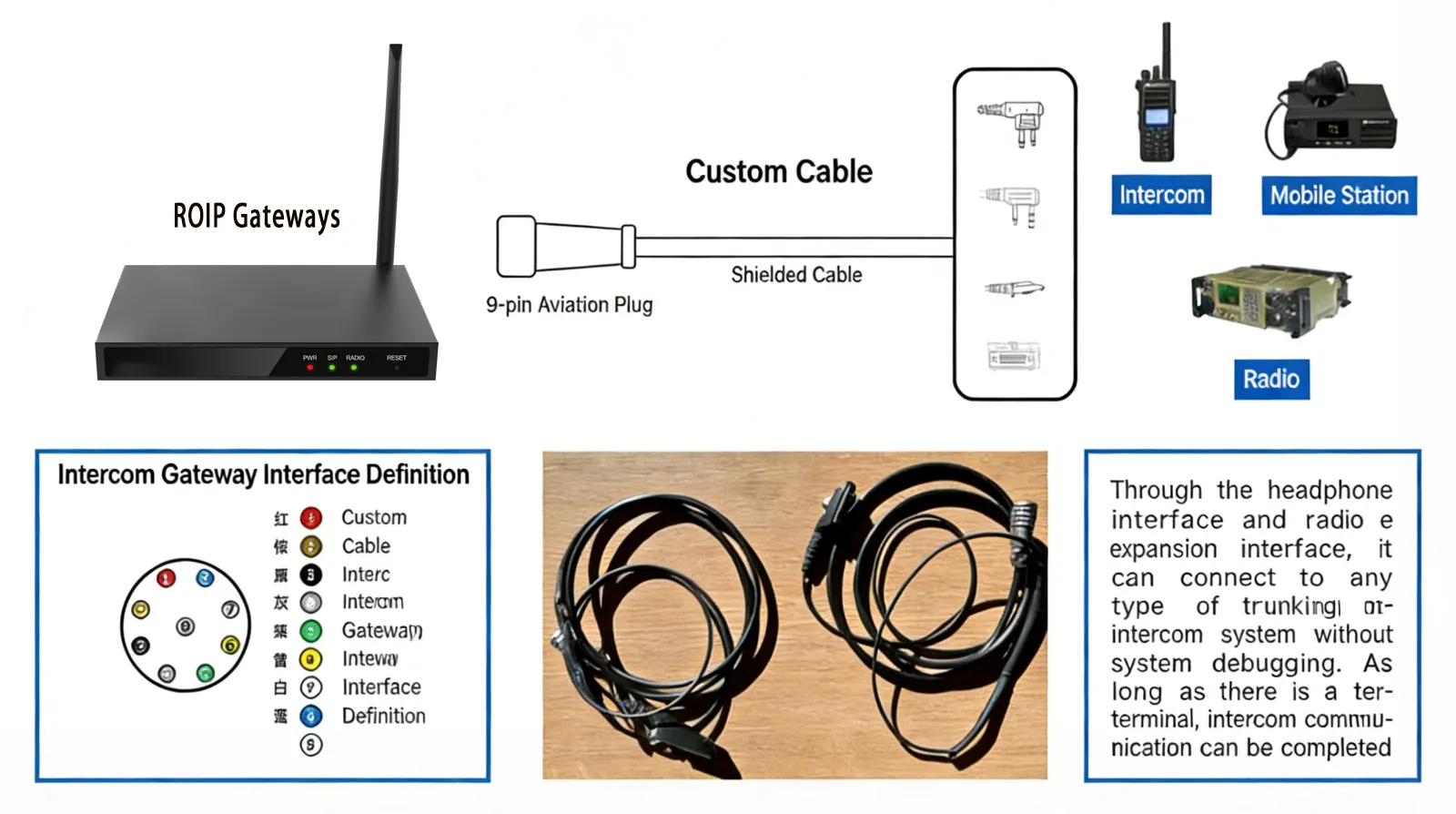
ROIP (Radio over IP) gateways—also known as intercom gateways or radio gateways—are specialized communication devices designed to convert analog voice signals from all types of two-way radios and intercom systems into IP-based SIP signals. Through flexible deployment, Becke Telcom ROIP gateways enable remote interconnection of intercom devices across different brands and protocols, seamlessly integrate with command and dispatch systems, and unlock advanced audio dispatch and control capabilities for professional use cases. In military applications, they even support remote radio management, transmitting voice signals to command centers via secure IP networks to enhance operational safety.
The practical application of ROIP gateways revolves around solving two core technical challenges: first, accessing intercom devices of all protocols to capture clear audio signals—a widely recognized pain point in the industry; second, converting the captured analog audio into standardized IP protocol signals. Leveraging the universal compatibility of the SIP protocol in voice communication systems, nearly all professional ROIP gateways, including Becke Telcom’s offerings, feature native SIP support as the primary IP communication standard. This article breaks down the core working principles of ROIP gateways, their device connection methods, key technical capabilities, and practical deployment practices, based on Becke Telcom’s industrial-grade ROIP gateway solutions.
Core Challenges Solved by ROIP Gateways
ROIP gateways address the two most critical barriers to seamless intercom system integration, which have long plagued professional users in public safety, transportation, military, and industrial sectors:
- Multi-protocol intercom access: The intercom and radio market features a vast array of devices with proprietary protocols, interfaces, and signal standards for different industries. Without a unified access device, cross-brand and cross-protocol interconnection is nearly impossible.
- Analog-to-IP signal conversion: Traditional intercom systems rely on analog wireless signals with limited transmission range and poor compatibility with modern IP-based command and dispatch systems. Converting these analog signals to standardized SIP/IP signals is essential for remote communication and system integration.
Becke Telcom’s ROIP gateways are engineered to solve both challenges with optimized hardware design and flexible software configuration, supporting full compatibility with almost all intercom and radio devices on the market while ensuring low-latency, high-fidelity analog-to-IP signal conversion.
Connecting ROIP Gateways to Intercoms of All Protocols and Types
The term "intercom" in the context of ROIP gateways refers to a broad range of wireless communication devices, including handheld two-way radios, vehicle-mounted radio stations, fixed base stations, and specialized military radio equipment. Different industries use entirely different intercom protocols and device types, each with unique hardware interfaces and signal specifications:
- Public safety: PDT and TETRA digital trunking intercom systems
- Aviation and maritime: VHF (Very High Frequency) radios compliant with industry-specific standards
- Military and defense: HF (High Frequency) shortwave radios for long-range communication
- Industrial sectors: Analog and digital intercoms for parks, mines, and ports
The Challenge of Diverse Hardware Interfaces
The primary obstacle to connecting these devices is the lack of a universal interface standard—different manufacturers and models feature unique interface definitions, pinouts, and connection methods for audio and control signals. This heterogeneity creates significant difficulties for direct device-to-gateway integration, often requiring custom solutions for each project.
Becke Telcom’s Universal Connection Solution
Becke Telcom’s industrial-grade ROIP gateways solve the interface compatibility issue with a purpose-built hardware design and customizable connection accessories, eliminating the need for complex system debugging and enabling plug-and-play interconnection with any intercom device as long as the terminal is available:
- 9-core aviation connector: The gateway features a rugged 9-core aviation plug as the core connection port, a standard in industrial and professional communication for its stability and anti-interference performance in harsh environments.
- Comprehensive interface definitions: The gateway provides rich, configurable interface pinouts including COR+, COR-, MIC+, MIC-, SPK+, SPK-, GND, and PTT signal pins. This full set of audio input/output and control signal interfaces ensures compatibility with any brand or model of intercom, radio, or base station.
- Custom and shielded cables: Becke Telcom offers custom-made connection cables and high-quality shielded cables for different device interfaces (e.g., headphone jacks, radio expansion ports). The shielded cables minimize signal interference, ensuring clear audio transmission even in high-electromagnetic-interference environments such as industrial sites and military operations.
This connection solution supports direct integration with any intercom trunking system via standard or custom ports, with no changes or debugging required for the original intercom system—greatly simplifying on-site deployment and reducing project implementation time.
Advanced Voice Detection and Activation Capabilities
Successfully connecting intercom devices is only the first step; without targeted voice signal processing and flexible activation modes, the integration effect will be compromised by poor audio synchronization, high latency, and unreliable PTT (Push-to-Talk) triggering. Different intercom systems operate with distinct working principles and signal transmission modes, making a one-size-fits-all activation method ineffective. Becke Telcom’s ROIP gateways address this with a suite of advanced voice detection and activation capabilities, optimized for the complex working conditions of professional intercom systems.
Multiple Detection and Activation Modes
Becke Telcom ROIP gateways support three core voice/ signal detection and activation modes, allowing users to select the optimal mode for their specific intercom devices and application scenarios:
- COR (Carrier Operated Relay) Detection: The gold standard for professional radio systems, COR detection triggers audio transmission by identifying the carrier signal of the intercom/radio. This mode ensures ultra-low latency and reliable activation for digital trunking systems and high-power radios.
- VOX (Voice Operated Exchange) Detection: A voice-activated mode that triggers transmission automatically when a preset audio volume threshold is detected, eliminating the need for manual PTT operation for certain use cases.
- VMR (Voice Modulation Recognition) Detection: An advanced audio detection mode that identifies valid voice signals by analyzing audio modulation characteristics, filtering out background noise and ensuring accurate activation in noisy industrial or field environments.
Unique COR Detection for Handheld Intercoms
A key differentiator of Becke Telcom ROIP gateways is their ability to support COR carrier detection for handheld intercoms— a feature rarely available in standard ROIP gateways, which typically only offer COR detection for fixed radio stations and base stations. By enabling COR detection for handheld intercoms, the gateway significantly improves PTT activation speed, reduces transmission latency, and ensures real-time audio communication— a critical advantage for time-sensitive scenarios such as public safety emergencies and military operations.
SIP/VOIP Functionality and Flexible Networking Modes
Converting analog intercom voice signals into standardized SIP/IP signals is the core functional value of ROIP gateways, and Becke Telcom’s GRW series ROIP gateways feature robust VOIP capabilities with two flexible networking modes, designed to integrate with all modern IP-based communication and dispatch systems.
Core SIP Protocol Conversion
The gateway converts captured analog audio signals from intercoms/radios into digital SIP voice signals in real time, leveraging the SIP protocol’s universal compatibility to enable seamless integration with VOIP systems, softswitches, video conferencing systems, and command and dispatch platforms. The SIP conversion process ensures high audio fidelity and low latency, with no perceptible quality loss for end users.
Two Key Networking Modes
Becke Telcom ROIP gateways support Registration Mode and Trunk Mode for SIP networking, adapting to different project scale and system integration requirements:
- Registration Mode: The gateway registers as an extension on a SIP server/IPPBX, with each radio channel or intercom protocol mapped to a unique SIP extension number. Users can initiate intercom calls by dialing the corresponding SIP number from any IP terminal (e.g., IP phone, dispatch console).
- Trunk Mode: The gateway acts as a peer-to-peer SIP trunk, enabling direct SIP communication with other SIP-enabled devices/systems without the need for a central SIP server. This mode is ideal for decentralized deployment and remote interconnection scenarios.
POC Platform Integration
For users with public network POC (Push-to-Talk over Cellular) intercom platforms, Becke Telcom ROIP gateways provide custom signaling modes for talker right acquisition and release. This enables seamless integration with all mainstream POC public network intercom platforms, breaking down communication barriers between POC public network intercom systems and private network radio/intercom devices— a key enabler for public-private converged communication in industrial parks, mines, ports, and public safety sectors.
Simple Configuration
Configuring Becke Telcom ROIP gateways for SIP/VOIP integration is as straightforward as setting up a standard IP phone. The gateway features an intuitive web-based management interface, with no complex programming or professional telecom knowledge required for basic configuration. This simplicity greatly reduces the learning curve for on-site technicians and accelerates system deployment.
Built-In Function Verification for Efficient On-Site Debugging
On-site deployment and debugging of ROIP gateways can be complex, with potential issues including faulty cable connections, incorrect pinouts, poor wireless signal reception, and audio gain mismatches. A professional ROIP gateway with built-in function verification capabilities can significantly shorten debugging time and improve project delivery efficiency— a key feature of Becke Telcom’s ROIP gateways.
Comprehensive On-Board Verification Tools
Becke Telcom ROIP gateways include a full set of built-in function verification and debugging tools, accessible via the web management interface or local control panel, allowing technicians to quickly identify and resolve issues at each stage of the connection process:
- Audio signal testing: Real-time monitoring of incoming and outgoing audio signals to verify clear audio capture and transmission.
- PTT control testing: Manual PTT activation and release to validate the PTT signal connection between the gateway and intercom device.
- Gain adjustment: Configurable receive gain (up to 18dB) and transmit gain (down to -4dB), plus analog gain adjustment, to optimize audio volume and clarity for different device types and environments.
- COR status monitoring: Real-time display of COR carrier detection status to verify valid wireless signal reception from intercom/radio devices.
- Signal attenuation testing: Simulated signal attenuation (e.g., -10dB) to test the gateway’s performance in weak signal environments.
Rapid Troubleshooting
With these verification tools, technicians can quickly determine the root cause of any issue: faulty cable connections or incorrect pinouts, poor wireless intercom signal, audio gain mismatches, or gateway configuration errors. This eliminates the need for time-consuming trial-and-error debugging and ensures the ROIP gateway system is operational in the shortest possible time.
Key Application Scenarios of Becke Telcom ROIP Gateways
ROIP gateways have a wide range of professional applications across nearly all industries that rely on wireless intercom and radio communication, with Becke Telcom’s industrial-grade solutions optimized for the unique requirements of each scenario:
- Military and defense: Remote radio management and secure voice transmission via IP networks, with COR detection for all radio types to ensure real-time command and communication.
- Public safety: Interconnection of PDT/TETRA digital trunking systems with IP-based command and dispatch platforms, enabling seamless communication between field officers and command centers.
- Aviation and maritime: Integration of VHF/UHF radios with ship/aircraft IP communication systems, supporting long-range remote communication and dispatch.
- Industrial sectors (parks, mines, ports): Public-private converged communication, connecting private network intercoms with POC public network intercom platforms and IP phone systems.
- Transportation: Integration of on-board intercoms with railway/road command and dispatch systems, enabling centralized audio control and remote communication.
In all these scenarios, Becke Telcom ROIP gateways act as the core bridge between traditional analog intercom systems and modern IP-based communication platforms, unlocking advanced dispatch capabilities while preserving the user’s existing investment in intercom/radio hardware.
Best Practices for ROIP Gateway Deployment
To maximize the performance and reliability of ROIP gateways, Becke Telcom recommends the following best practices for on-site deployment and configuration:
- Select the right connection cables: Use custom shielded cables provided by Becke Telcom for intercom/radio connections to minimize electromagnetic interference and ensure stable signal transmission.
- Match activation modes to devices: Use COR carrier detection for professional radios and digital trunking systems for low latency; select VOX/VMR detection for handheld intercoms in casual use cases.
- Optimize audio gain: Adjust receive and transmit gain based on the intercom device’s power and the on-site environment to avoid audio distortion or low volume.
- Leverage built-in verification tools: Use the gateway’s on-board testing tools to complete full debugging before formal deployment, ensuring all connections and functions are operational.
- Customize for platform integration: Work with Becke Telcom’s technical team to configure custom signaling modes for POC or command and dispatch platform integration, ensuring seamless interconnection.
Conclusion
ROIP gateways are the indispensable core device for modernizing traditional intercom and radio systems, enabling analog-to-IP conversion, cross-protocol interconnection, and seamless integration with IP-based command and dispatch platforms. Becke Telcom’s industrial-grade ROIP gateways solve the industry’s two core pain points—multi-protocol device access and low-latency signal conversion—with a rugged hardware design, comprehensive interface compatibility, advanced voice detection and activation capabilities, and flexible SIP/VOIP networking modes. The built-in function verification tools further streamline on-site debugging and deployment, reducing project time and costs.
Whether for military defense, public safety, aviation maritime, or industrial dispatch, Becke Telcom ROIP gateways deliver the reliability, compatibility, and performance required for professional communication scenarios. By bridging traditional intercom systems and modern IP communication platforms, they enable public-private converged communication, remote dispatch, and centralized control—empowering users to unlock the full potential of their communication infrastructure while preserving existing hardware investments. As professional intercom systems continue to evolve toward IP convergence, ROIP gateways will remain the core enabler of seamless, real-time, and secure audio communication for all professional use cases.
標籤:
相關新聞
2026-09-29
2026-09-22
2026-08-31
2026-08-24
2026-08-17


電子郵件地址:
熱線電話: